News About Contact (281) 499-0561
Material Fabrication

Limestone, cut for the way it actually gets used.

A soft, matte, quarried stone with a warm, understated face — limestone reads differently than a high-contrast marble or granite, and we fabricate it accordingly, in-house at our 52,080 sq ft Missouri City shop.

Limestone is a sedimentary stone, and it looks the part: fine, even texture, muted tan-to-cream tones, and occasionally the faint trace of fossil or shell structure locked in the bed. There's no dramatic veining to chase and no two-slab bookmatch to plan around — the appeal is consistency and quiet, matte warmth rather than movement. That's exactly why it's a go-to for exterior facades, entry cladding, and interior flooring where a building or a home wants a natural, non-reflective surface instead of a polished showpiece.

The tradeoff is porosity. Limestone is softer and more absorbent than granite or engineered quartz, so it takes on stains and etches more readily if it's left unsealed in a high-traffic or high-spill environment. We don't spec it for commercial kitchen counters or bar tops for that reason. Where it excels is lower-traffic and properly sealed applications — building exteriors, lobby and hallway flooring, fireplace surrounds, feature walls, and outdoor patios — anywhere the matte, natural face matters more than resistance to daily abuse, and where a sealing schedule is part of the maintenance plan from day one.

On the floor, that means honed rather than high-polish finishes most of the time, edge profiles that respect the stone's softer character instead of forcing a harder-stone detail onto it, and templating that accounts for slightly more careful handling during cutting and transport than a dense granite would need. Waterjet work still applies where inlay or precise cladding cuts are called for — the process changes with the material, not the shop.

Every slab is fabricated and finished under one roof by the same crews who've run our floor for three generations, so whether limestone is going onto a commercial building's exterior, a luxury home's flooring package, or a sealed kitchen-and-bath accent, it's quoted, cut, and installed with the same accountability as everything else that leaves our shop.
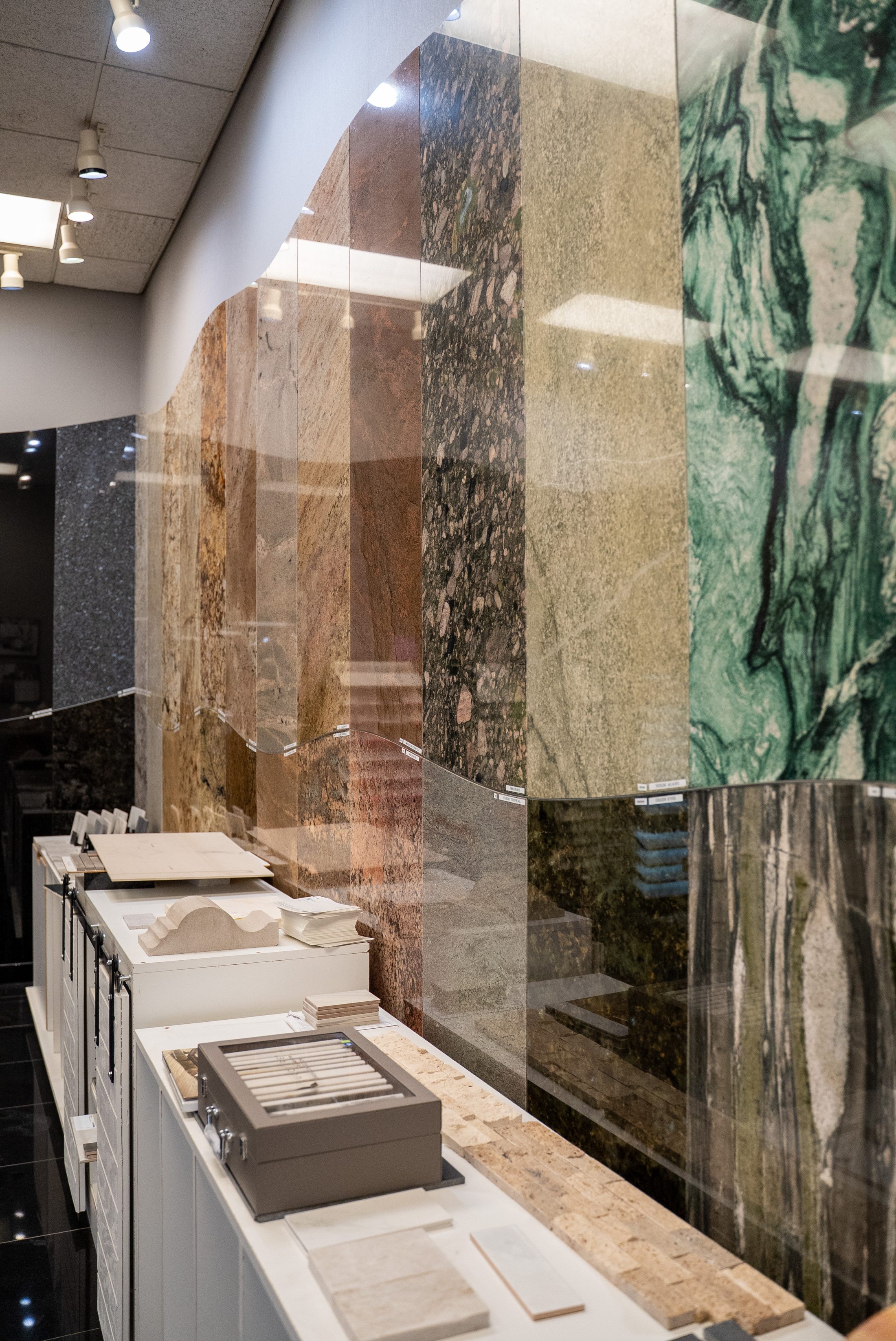
Limestone and natural stone slabs at Cangelosi Company
Where It's Used

Built for facades and floors, not busy counters.

Facades & Exteriors

Limestone is one of the most common exterior cladding materials we fabricate — building entries, columns, sign monuments, and full facade panels for commercial and institutional work. The appeal is the matte, non-reflective face: it reads as quarried stone rather than a polished, showroom finish, which is exactly the look architects specify for street-facing masonry, office entries, and civic or religious buildings. We cut it in the panel sizes and thicknesses a facade detail calls for, then coordinate with the mason or GC on anchoring and joint layout the same way we do for granite or thin veneer cladding.

Interior Flooring

Inside, limestone shows up most often as lobby, hallway, and formal-space flooring — honed to a soft, low-glare finish rather than a mirror polish. It's a strong fit for spaces that want a natural stone floor without the higher contrast of granite or marble: hotel lobbies, church naves, museum and gallery floors, and residential entries. Because the color range runs tan-to-cream with minimal veining to match across pieces, large floor layouts read as one continuous surface instead of a patchwork of bookmatched slabs.

Living With Limestone

Care, sealing, and how it stacks up against the alternatives.

Sealing & Traffic Level

Limestone is softer and more porous than granite or engineered quartz, so a sealing schedule is part of the deal from day one, not an afterthought. On exteriors and sealed interior flooring, that means an initial seal at install and a re-seal on a regular cycle after — how often depends on the finish, the traffic, and how exposed the surface is to weather or foot traffic, which we spec at the time of the job rather than on a blanket schedule. Limestone is best suited to low-to-moderate traffic and exterior applications where it's properly sealed and maintained; we don't recommend it for commercial kitchen counters, bar tops, or other high-spill, high-abrasion surfaces where a non-porous material will hold up with far less upkeep.

Limestone vs. Granite and Porcelain for Exterior Work

For commercial exteriors, limestone, granite, and large-format porcelain all get specified, and the right call comes down to look and maintenance tolerance more than performance alone. Granite holds up to weather and abrasion with less sealing upkeep and a harder, more reflective face; porcelain resists UV, scratching, and staining with almost no maintenance at all but reads as a manufactured surface rather than quarried stone. Limestone sits between them on durability but wins on the matte, natural look architects specify when a building needs to read as cut stone rather than polished or engineered material — and Houston's humid climate makes a properly sealed installation and a real maintenance plan the deciding factor either way.

Common Questions

Limestone fabrication, answered.

Is limestone durable enough for Houston's climate and humidity?

Yes, on the right application. Limestone handles Houston's heat, humidity, and heavy seasonal rain well as an exterior cladding or flooring material as long as it's properly sealed and detailed — good drainage at joints, correct anchoring, and a sealing schedule suited to how exposed the surface is. What it's not built for is standing water or constant saturation, so we spec drainage and slope the same way we would for any exterior stone installation.

How often does limestone need to be sealed?

It depends on the finish, the exposure, and the traffic the surface sees — an interior lobby floor and an exterior facade panel don't wear the same way, so we don't quote a single blanket interval. We walk through the expected sealing cycle for your specific application at the quoting stage so it's part of the maintenance plan from day one, not a surprise later.

Is limestone better suited to indoor or outdoor use?

Both, but for different reasons. Outdoors, it's a facade and cladding material prized for its matte, quarried look. Indoors, it works well as flooring in lobbies, hallways, and other low-to-moderate traffic formal spaces. We steer clients away from it for wet, high-traffic, or high-spill surfaces like kitchen counters, where a denser or non-porous material holds up with less upkeep.

How does limestone's cost compare to granite?

Material and fabrication cost varies by the specific quarry, finish, and panel or slab size involved, so we quote each job rather than publish a flat comparison — but as a general rule, limestone and granite land in a similar range, with the deciding factor usually being which look and maintenance profile fits the project, not a large price gap between them. Send us the spec and we'll give you real numbers.

What's the typical lead time on a limestone order?

It depends on scope and sourcing. Once a template is finalized and material is confirmed, most commercial limestone jobs move through fabrication in a matter of weeks — quicker if we're working from material already in stock, longer if we're sourcing a specific quarry or finish on your behalf. We'll give you a real timeline once we see the spec.

Used Across

Where limestone shows up in our work.

Same material, same shop — different applications depending on the project.

Ready When You Are

Send us the spec — we'll quote the stone.