Large-format porcelain slabs bring the pattern range of natural stone with a scratch, UV, and heat resistance that lets them go straight from a kitchen island to a pool deck. Fabricated in-house in Missouri City.
Porcelain slabs are fired at extreme temperatures until the material sinters — compresses into a surface that's harder and denser than most natural stone. That's what makes porcelain one of the few countertop and cladding materials we fabricate that's genuinely rated for both interior and exterior use without a change in spec.
Scratch resistance is the first thing clients notice: knives, cast iron, pet claws, and patio furniture don't mark it the way they mark quartz or softer natural stone. Because the color runs through the material rather than sitting on a sealed surface, porcelain doesn't fade or chalk under direct Houston sun the way some engineered surfaces do over a few summers outdoors — a real consideration for anything installed poolside or on an uncovered patio. And because it's fired, not sealed, porcelain shrugs off direct heat: hot pans, fire feature proximity, and grill-adjacent counters are all within spec, no trivet required.
That combination is why we fabricate porcelain for both ends of a project — the kitchen island inside and the outdoor kitchen twenty feet away, the same slab lot run through both spaces for a consistent look indoors and out. It's a natural fit for fire features, outdoor kitchen counters and backsplashes, pool surrounds, and covered-patio flooring, alongside its more familiar use on interior kitchen counters, waterfall islands, and full-height shower surrounds.
Porcelain is also fully non-porous — no sealing, no staining from wine or oil, easy cleanup with soap and water. Large-format sheets mean fewer seams across a run of counter or an outdoor kitchen wall, which is as much an aesthetic decision as a practical one.
Fabricating slabs at this scale takes purpose-built handling: vacuum lifting equipment to move sheets without cracking them, and blade and waterjet setups dialed in for a much harder material than granite or marble. That equipment lives on our floor in Missouri City, where every porcelain job — cutting, edge profiling, cutouts, and outdoor-rated sealant work at the joints — is fabricated and staged before it goes out with our own install crews.
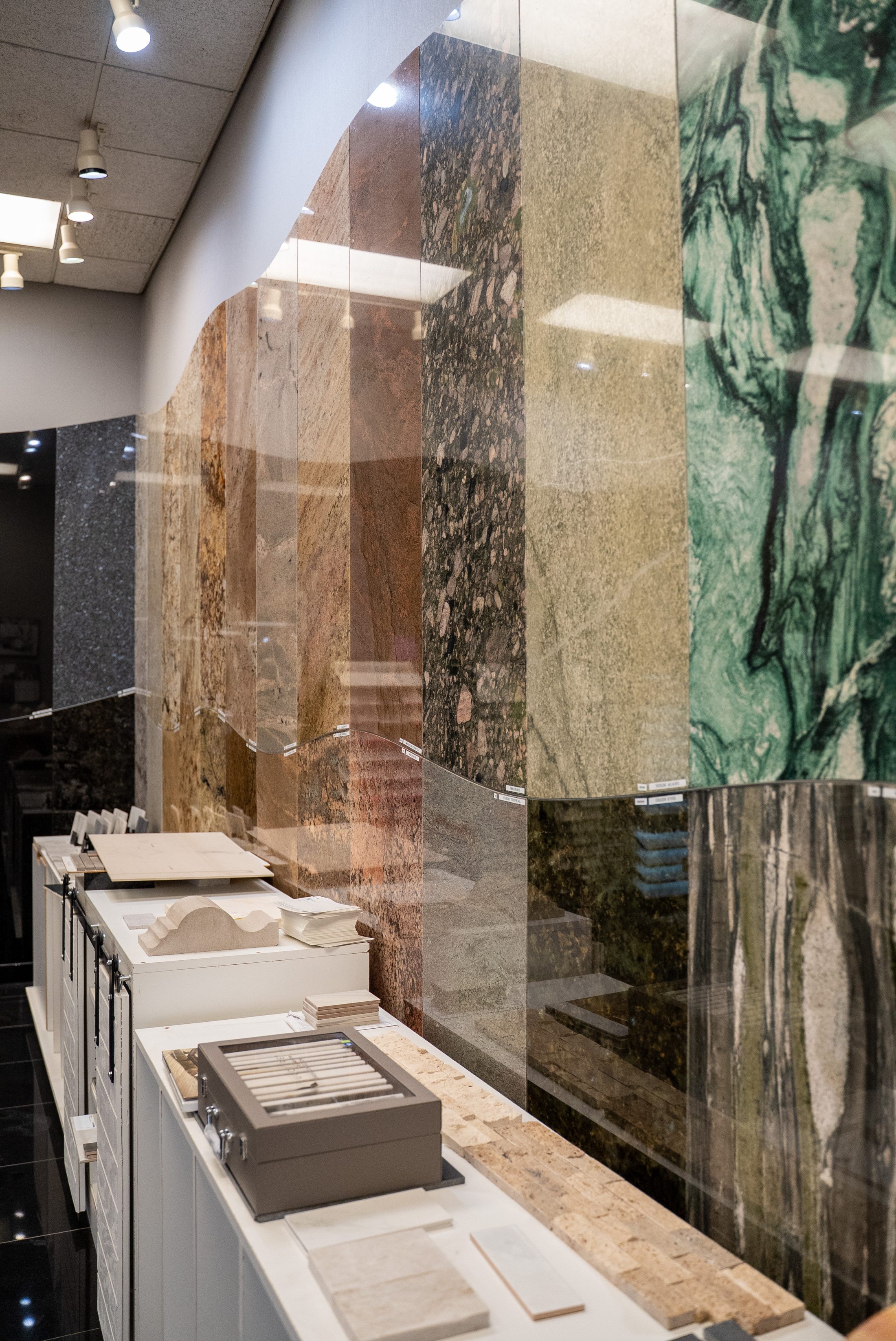
Interior and covered-patio flooring cut from oversized sheets, meaning far fewer grout lines across a great room, lobby, or breezeway than standard tile. Cool underfoot, fully non-porous, and rated for the same foot traffic as commercial-grade tile without the maintenance.
Grill surrounds, outdoor kitchen counters and backsplashes, and fire feature surrounds where direct flame proximity and radiant heat would degrade quartz or a sealed natural stone finish over time. Porcelain holds its color and finish under that exposure without a change in spec.
Rainscreen and accent cladding on commercial facades and residential exteriors, where large-format sheets cut down on visible joints across a building elevation and the material's UV stability keeps the color from fading or chalking over years of Houston sun.
Porcelain's maintenance list is short because the material is fired, not finished. Sintering compresses the raw material at extreme temperature and pressure until it becomes dense and largely non-porous all the way through, rather than relying on a topical sealer that wears off and needs reapplying. Day to day, that means soap and water, no sealing schedule, and no staining from wine, oil, sunscreen, or pool chemicals soaking into the surface.
Scratch resistance follows from the same density — porcelain sits near the top of the hardness scale for fabricated surfaces, so knives, cast iron, pet claws, and dragged patio furniture don't mark it the way they mark quartz or softer natural stone. Because color and pattern run through the body of the material rather than sitting in a surface layer, porcelain doesn't fade, chalk, or yellow under sustained UV exposure the way some sealed or resin-based surfaces do after a few Houston summers outdoors.
Heat resistance is the third piece: a fired ceramic surface tolerates direct heat sources — hot pans straight off the stove, proximity to a fire feature, grill-adjacent counters — that would require a trivet or heat pad on most other countertop materials. Between the scratch, UV, and heat resistance, porcelain is one of the few surfaces we fabricate that genuinely needs no special care routine in either an interior kitchen or an uncovered outdoor installation.
Most materials that work well outdoors don't match what's used indoors, so a kitchen island and an outdoor kitchen twenty feet away end up in two different materials with two different looks. Porcelain is one of the few surfaces rated for both environments at once, which means we can run the same slab lot from an interior kitchen counter straight through to an outdoor kitchen, pool surround, or covered-patio floor with zero visual break between them.
For a Houston builder or homeowner planning true indoor-outdoor living — a great room that opens onto a covered patio, a kitchen island that lines up with an outdoor cook station — that continuity is a real design advantage over mixing quartz inside with a different exterior-rated stone or tile outside. One material, one color lot, one fabricator, from the interior counter to the exterior hardscape.
Yes — that's one of the material's core advantages here. Because porcelain is fired rather than sealed, and its color runs through the body of the slab, it doesn't fade, chalk, or degrade under sustained direct sun the way some engineered or resin-based surfaces do after a few summers outdoors. It also tolerates direct heat from grills and fire features without a change in spec.
Large-format porcelain sheets are lifted and moved with vacuum handling equipment designed specifically for slabs this size, since standard slab carts and manual lifting risk cracking them. Our shop runs that equipment alongside blade and waterjet setups dialed in for a material that's considerably harder than granite or marble, and our own crews handle the install to keep that same care through to placement.
Porcelain typically runs comparable to or somewhat above mid-to-upper-tier natural stone at the material level, but the large-format sheets mean fewer seams and less waste on a big run, and the low-maintenance profile lowers long-term cost. We quote it alongside granite, marble, and quartz in the same bid so you can compare options directly.
We fabricate porcelain in the standard thin large-format thicknesses used for countertops and cladding, up to heavier options for flooring and exterior applications that need more impact resistance underfoot or on a facade. The right thickness depends on the application — tell us the project and we'll spec it.
Lead time depends on slab availability, run length, and current shop load. As a general range, most porcelain packages move from approved template to installed surface within a few weeks — we'll confirm a firm, project-specific date once we've templated the space and confirmed material.
Porcelain counters, cladding, and outdoor surfaces show up in commercial, luxury residential, and kitchen & bath builds alike — see how each persona puts it to work.